

- Explore Norfolk
- Walking Holidays
- Walsingham Way Pilgrimage Walking Route
- Churches Along The Walsingham Way
Churches Along the Walsingham Way
The churches along the Walsingham Way bear witness to centuries of faith, skill, and devotion.
And I can't talk about the Walsingham Way without mentioning most of the churches along this route because each one tells a story that goes far beyond the stone and glass; and that’s why I love them. I’m forever inspired by Ken Follet’s brilliant novel “The Pillars of the Earth”. If you’ve read it, you'll know what I mean when I say I'm in awe at how these incredible buildings were constructed.
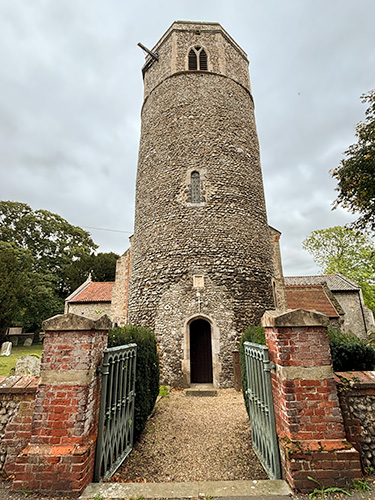
Having walked the Walsingham Way myself, I can happily say there’s nowhere in Norfolk where this wonderful heritage feels more alive. The route literally links together some of Norfolk’s most beautiful and historically significant churches.
Norwich Churches: The First Steps on the
Walsingham Way
This Walsingham Way pilgrimage starts in Norwich, once England’s second-largest mediaeval city. From here, pilgrims set out on a 37-mile journey through peaceful Norfolk countryside, following a path trodden for nearly a thousand years.
Norwich Cathedral (Anglican)
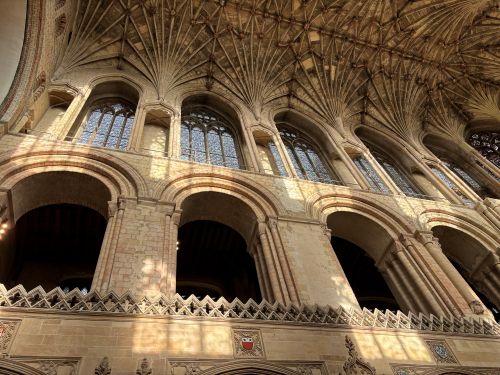
At the heart of Norwich stands the awe-inspiring Norwich Cathedral, with the second tallest spire in England.
Every time I visit, I’m totally inspired, it really is magnificent; the soaring height of the nave, the limestone walls which were imported from Normandy (and the stone brought along the River Wensum to Pull’s Ferry, just down the road from the cathedral to Norwich), and the very special cloisters with their fan vaulting.
Cathedral of St John The Baptist (Catholic)
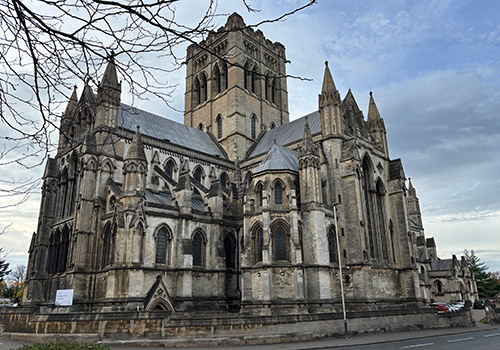
If you prefer a Catholic starting point, the Cathedral of St John the Baptist offers Gothic Revival grandeur. Designed by George Gilbert Scott Jr. and constructed between 1882 and 1910, it welcomes pilgrims and adds its own distinctive character to the journey.
It’s well worth dropping into this cathedral as well as the Anglican one.
St Julian Church
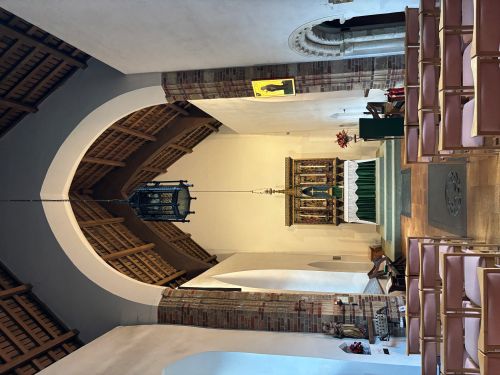
Among Norwich’s most treasured spiritual sites is the Shrine of St Julian, dedicated to a remarkable medieval anchoress whose inspired writings draw pilgrims from around the world.
To visit the Shrine of St Julian, you’ll need to take a short walk to the Julian Centre on Rouen Road, Norwich, NR1 1QT. Here, you can enter the church and quietly sit in the cell where Julian lived in seclusion. It’s very basic and small, but for many pilgrims, this shrine marks an important spiritual stop before beginning their journey along the Walsingham Way.
Beyond Norwich: The Churches That Define the
Walsingham Way
Once through Norwich, the Walsingham Way is dotted with stunning churches, each with a hidden wealth of mediaeval art and history. For some, there’s more to churches than just the theological aspect but you can be “of faith or none” to enjoy their beauty as well as the pilgrimage route.
Why walk a pilgrimage route? Find out here.
St Peter’s Church, Ringland – Angels in the Roof
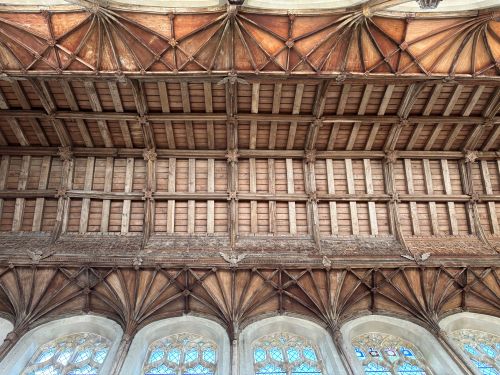
A slight detour at mile 10 of the route brings you to St Peter’s Church in Ringland, home to one of Norfolk’s finest wooden vaulted rooves. Its 15th-century hammerbeam roof is decorated with flights of angels, and is a truly breathtaking sight. The church also boasts some of the best-preserved late mediaeval stained glass in Norfolk.
St Mary’s Church, Elsing – The Hastings Brass
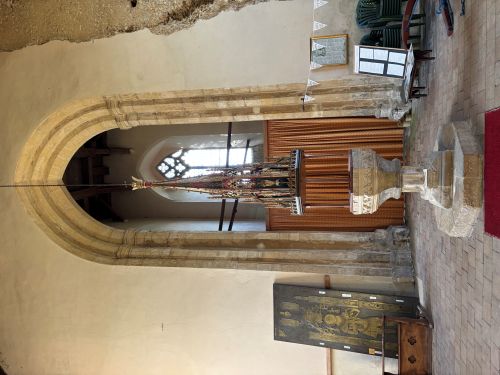
At mile 16, St Mary’s Church in Elsing stands out with its wide, pillarless nave - the broadest in East Anglia and it also has a spectacular medieval font cover.
The famous Hastings brass commemorates Sir Hugh Hastings, surrounded by angels and soldiers, offering a fascinating glimpse into medieval military history.
All Saints, Swanton Morley – The Cathedral of Mid-Norfolk
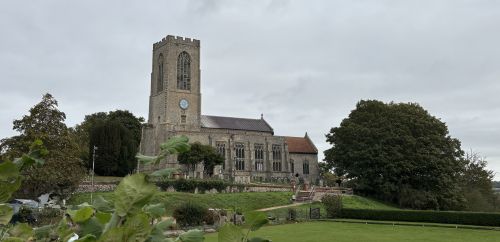
Known as the “Cathedral of Mid-Norfolk,” All Saints Church at mile 18 stands high above the Wensum valley. Unfortunately it’s usually locked to protect it from vandalism (such a shame). However, this village has strong connections to WWII and the churchyard is one of many that is a Commonwealth War Grave Cemetery. Inside the church is a stained glass window honouring the brave airmen of RAF Swanton Morley.
St Margaret’s, Worthing - A Small Norman Church Hidden in the
Fields
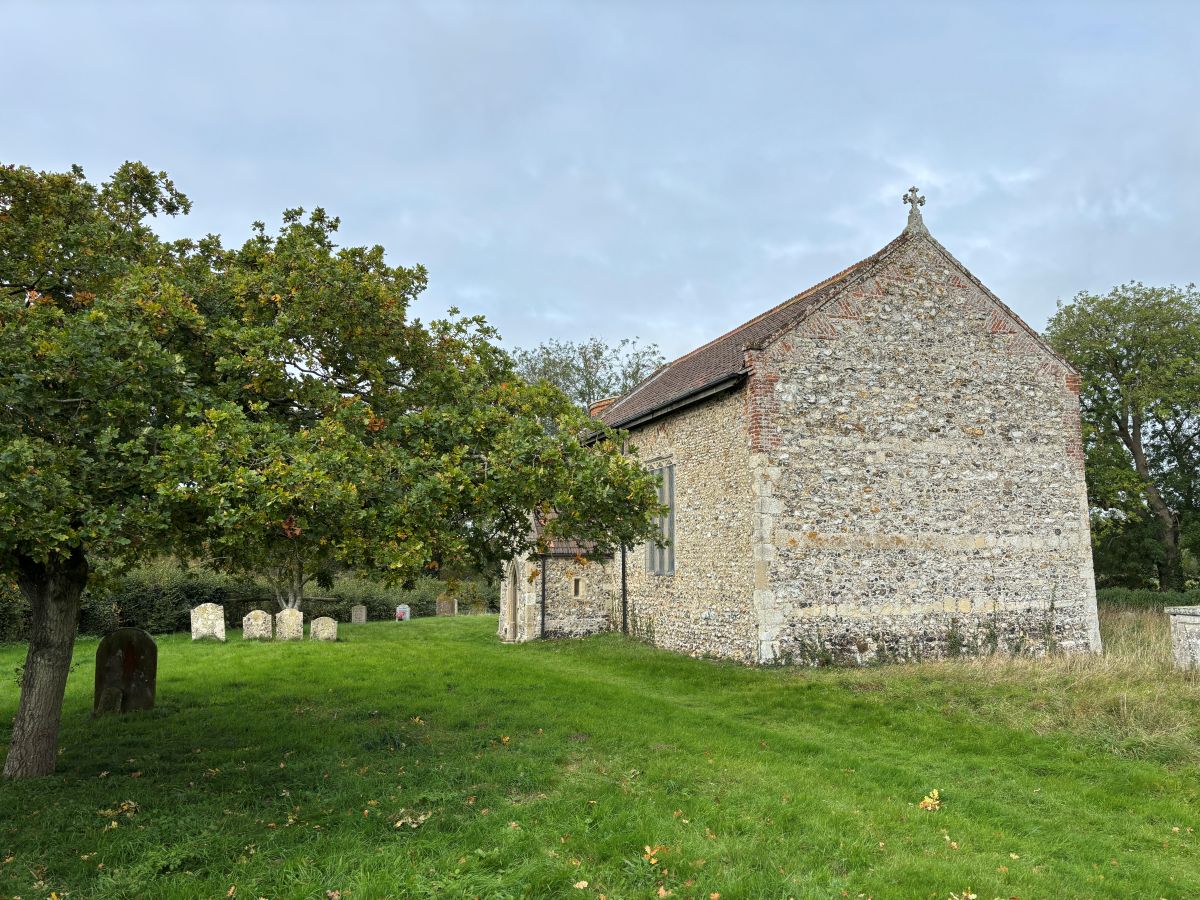
At mile 22.5 miles, this is one of Norfolk’s most secretive and smallest churches, tucked away among fields just outside the village of Worthing, and rarely found by chance.
This is well worth a 10 minute detour. Though small, with its chancel lost and tower lowered in the 18th century, it retains a wonderful Norman doorway revealing its 12th-century origins. The church also has one memorial to Edwin Neal, who died of dysentery during the Boer War in 1900.
St Mary’s, North Elmham: Historic Church with Medieval Art and Rood Screen
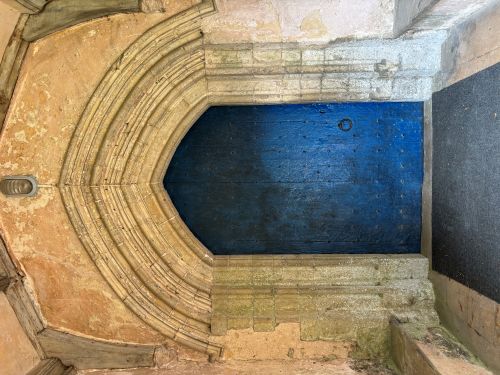
At mile 25, St Mary’s Church in North Elmham is a large 15th-century building sitting on top of the village and stands near the Norman ruins of North Elmham chapel. Its features unique pillars, medieval carvings, and a beautifully restored rood screen with colourful panels. It also has a wonderfully heavy door!
St Andrew’s, Great Ryburgh – Saxo-Norman Round Tower
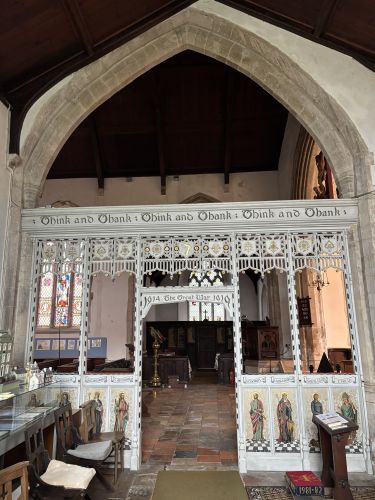
At mile 27.5, St Andrew’s Church is a rare round-towered gem from the 12th century, featuring a striking 14th-century octagonal bell stage. Inside, beautiful stained glass by William Wailes and a decorative chancel ceiling restored by Ninian Comper make this a true Norfolk treasure. This is a really pretty church inside – I think this, along with Worthing church is my favourite along the route.
All Saints, Stibbard – Local History Exhibition
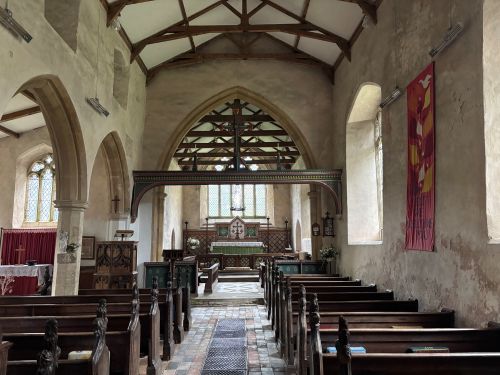
At mile 29, All Saints Church in Stibbard has a local history exhibition and also a welcome tea station - a perfect spot to rest!
St Andrew’s, Little Snoring – Detached Round Tower
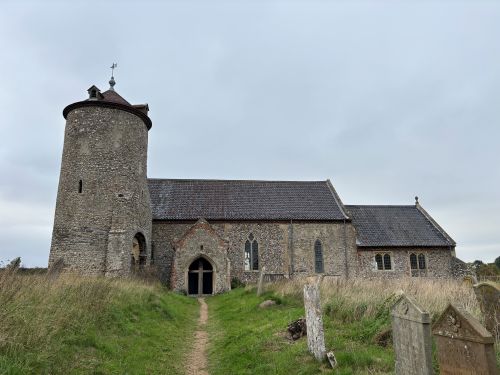
This is one of England’s architectural curiosities, St Andrew’s Church at mile 33 has a detached round tower dating from the Saxon period which is, apparently, very unusual. The church itself goes from Norman to Tudor architecture, with a Norman doorway decorated in classic zigzag patterns. Inside, plaques recall its World War II role serving the RAF.
St Mary’s, Great Snoring – Rare James II Coat of Arms
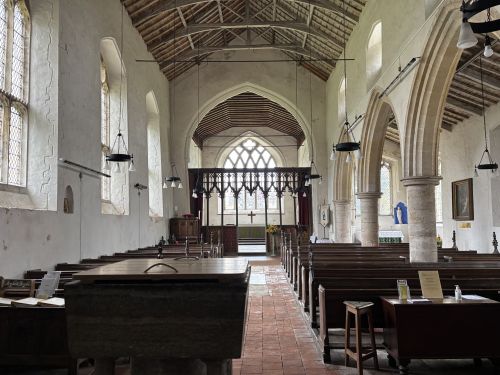
Just before reaching Walsingham at mile 34.5, St Mary’s Church is larger than many along the route, with its perpendicular architecture and a recently uncovered 15th-century rood screen, revealing figures hidden beneath whitewash. It also has a rare 1688 Coat of Arms of James II.
Slipper Chapel, Houghton St Giles
The Slipper Chapel is located by walking via Houghton St Giles which is a detour before arriving in Walsingham. Built in the mid-14th century and dedicated to Saint Catherine of Alexandria, it’s where medieval pilgrims once removed their shoes to walk barefoot the final mile to “England’s Nazareth", and some still do today.
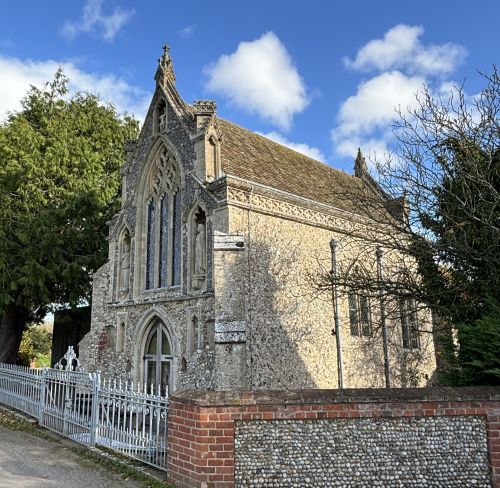
After years of varied uses following the Reformation, the chapel was lovingly restored in the late 19th century, bringing back its spiritual heart. Today, it stands as the home of the Roman Catholic National Shrine, welcoming thousands of visitors each year who come to reflect, pray, and continue a centuries-old tradition in this peaceful, historic space.
Anglican Shrine, Little Walsingham
The Anglican Shrine of Our Lady of Walsingham is a welcoming and peaceful place in the middle of Walsingham. Founded in the 1930s, it brings to life the ancien and at tradition of pilgrimage with its beautiful Holy House, echoing the original medieval shrine. It is High Church.
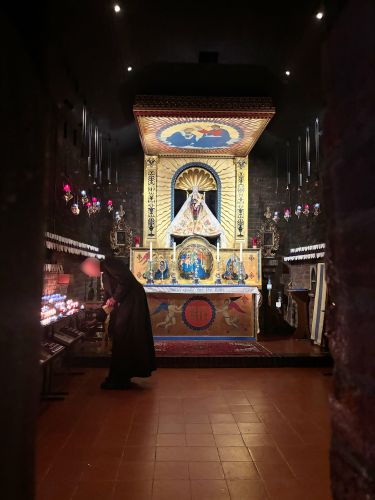
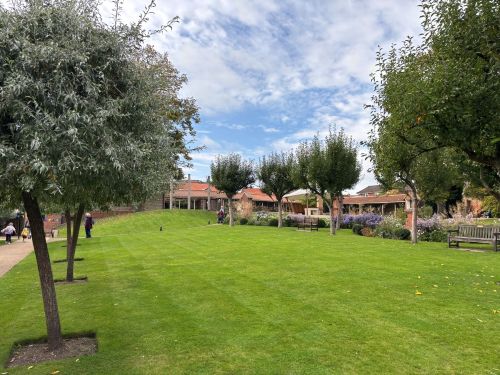
Take time to wander around the stunning chapels, gardens, and various places to pause and reflect. Whether you’re a pilgrim or simply just a curious person like myself, the shrine offers a chance to connect with centuries of faith and experience Norfolk’s rich spiritual heritage in a truly special setting.
Architectural Highlights: What Makes These Churches So Special?
I’ll briefly explain what makes these buildings truly special:
- Medieval stained glass, brass and painted rood screens, like Elsing’s brass of Sir Hugh Hastings and Great Snoring’s hidden rood screen, give us a rare look at how churches were decorated before the Reformation.
- The extraordinary timber hammerbeam and vaulted rooves at Ringland and Elsing show amazing craftsmanship combined with deep religious meaning.
- Norfolk’s famous round towers, such as those at Great Ryburgh and Little Snoring, reflect its Saxon and Norman history.
- Inside, smaller treasures like the carved misericords at North Elmham (carved wooden ledges that the clergy could rest their legs - like sitting on a stool) and alabaster memorials at Great Snoring add to the rich spiritual and artistic story.
Walsingham Today: Continuing a Sacred
Pilgrimage Tradition
The pilgrimage to Walsingham has seen a remarkable revival. Two shrines - Anglican and Catholic - and a Priory ruin welcome around 250,000 visitors annually. Modern pilgrims can also book organised Walsingham Way walking packages catering to different abilities, making this ancient tradition accessible to everyone.
Beyond religious significance, the Walsingham Way offers a chance for you to slow down, reflect, and connect with Norfolk’s rich cultural and natural heritage.
Walking these paths today, you join a community spanning centuries, discovering something meaningful about your own journey.
KEEP UP TO DATE
Get your free copy of the "Quick Guide To Norfolk Beaches". Find out more about our monthly newsletter here



Copyright© explorenorfolkuk.co.uk; 2013- All Rights Reserved